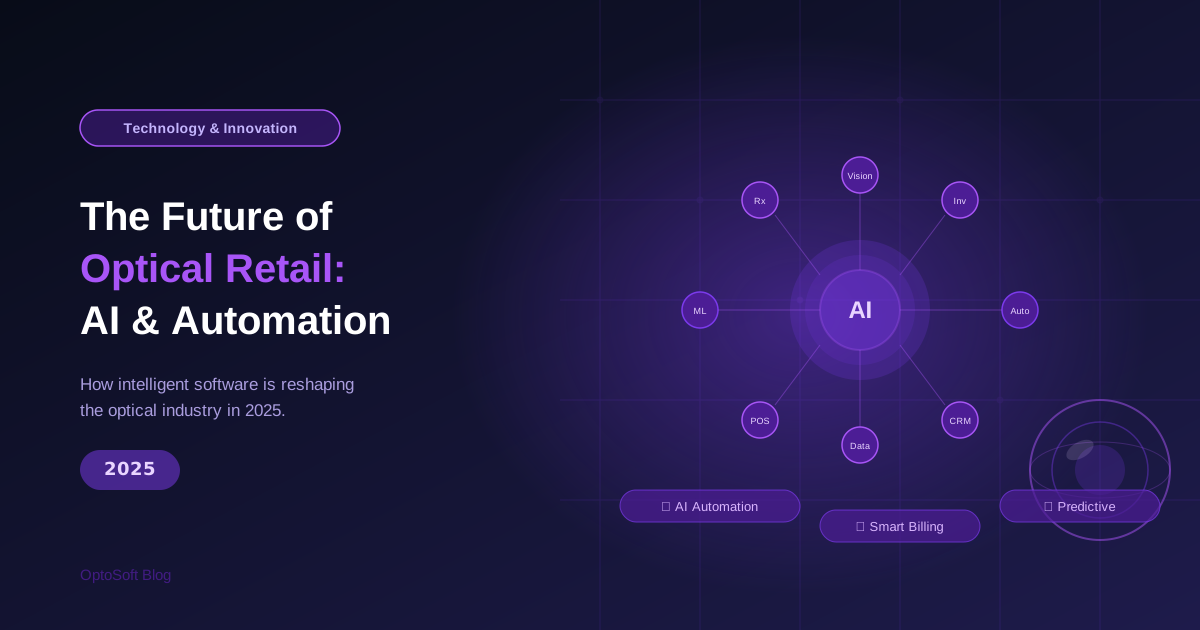
A New Era for Optical Retail
The optical retail industry is at an inflection point. After decades of relatively slow technological change, the convergence of cloud computing, artificial intelligence, mobile devices, and connected eyewear is driving a transformation that will reshape every aspect of how optical stores operate and how patients experience eye care.
For store owners and practice managers, understanding these trends is not just intellectually interesting — it is strategically essential. The practices that adopt the right technologies now will have a significant competitive advantage as the industry evolves. Here is what the next five years hold.
AI-Assisted Prescription Verification
Artificial intelligence is beginning to assist optometrists in verifying prescription accuracy. AI tools that analyse autorefractor data, compare against patient history, and flag unusual prescription changes are already being piloted in forward-thinking practices. While AI will not replace the clinical judgment of an optometrist, it will serve as a powerful safety net and efficiency tool, reducing the time required for routine refraction checks and flagging cases that warrant closer attention.
Predictive Inventory Management
Machine learning algorithms applied to historical sales data can predict which frames and lenses are likely to be popular in the coming season based on trends, patient demographics, and purchasing patterns. This shifts inventory management from reactive (reorder when you run out) to proactive (stock up before demand spikes). Early adopters of predictive inventory report significant reductions in both stockouts and overstock situations.
Smart CRM & Hyper-Personalisation
The next generation of optical CRM goes far beyond sending a prescription renewal reminder. AI-powered CRM analyses the complete history of each patient — their frame preferences, their response to previous communications, their purchase frequency, their contact lens loyalty — and uses this data to craft perfectly timed, genuinely personalised outreach. A patient who has never responded to a WhatsApp message but always opens emails at 7 PM on Thursdays will receive their next communication through that channel at that time. This level of personalisation was previously only available to large chains with dedicated data science teams — smart software is democratising it.
Virtual Try-On & Augmented Reality
Augmented reality frame try-on — where a patient can see how different frames look on their face using a smartphone camera — is already available and is becoming increasingly sophisticated. Integration of these tools with practice management software, so that a patient's AR try-on session can be linked to their record and their frame shortlist saved for the in-store visit, is the next logical development.
The Practice Management Platform of Tomorrow
OptoSoft is actively developing the next generation of features informed by these trends. The foundation is already in place: a cloud-native, mobile-first platform with deep integration across patient management, inventory, POS, and CRM. Building AI and predictive capabilities on top of this foundation is a natural evolution that will deliver the benefits of emerging technology to optical practices of all sizes — without requiring a technical team or a large IT budget.
The future of optical retail belongs to practices that combine clinical excellence with operational sophistication. The technology to achieve both is available today — and it is only getting better.