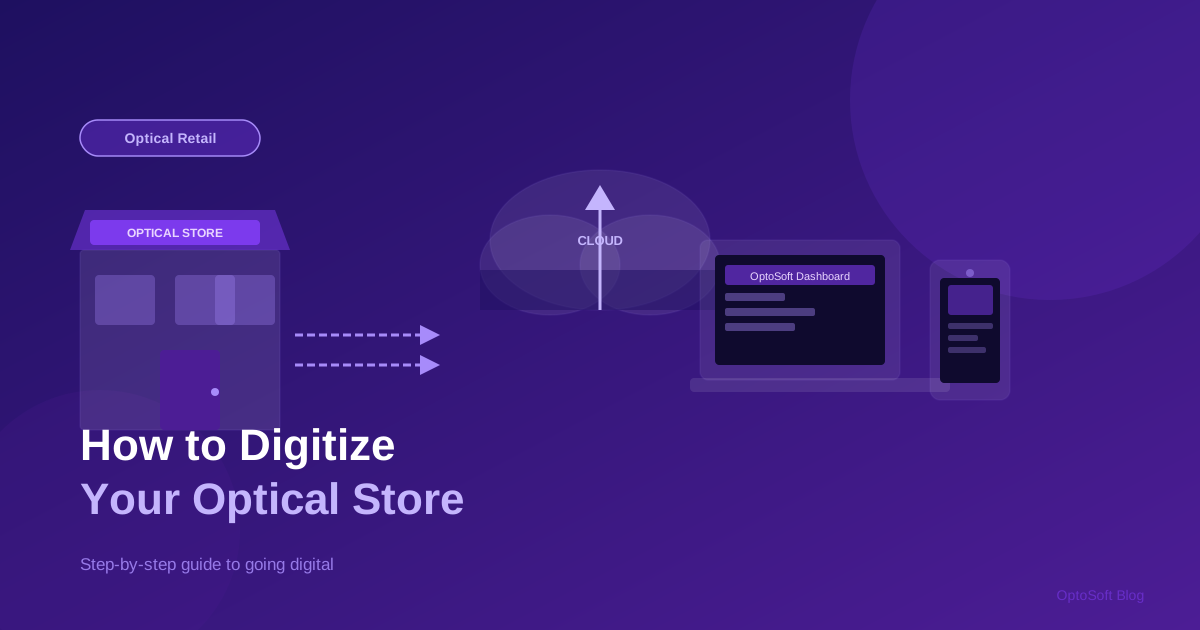
Why Digitization Is No Longer Optional for Optical Stores
Five years ago, many optical stores could still get by with paper prescription cards, manual stock books, and handwritten billing receipts. Today, that approach is a competitive disadvantage. Patients expect instant prescription history, fast billing, and proactive communication. Staff expect tools that save time rather than create extra work. And store owners need real-time data to make smart decisions.
Digitizing your optical store is not a single step — it is a phased transformation that touches every part of your business. This guide walks you through each phase, from your first digital patient record to a fully integrated cloud-based operation.
Phase 1: Digital Patient Records
Start here. Converting paper prescription cards to a digital database is the highest-impact change you can make. A digital patient record system lets you:
- Search any patient's full Rx history in seconds
- Store spectacle and contact lens prescriptions in separate, structured fields
- Flag patients whose prescriptions are due for renewal
- Share records securely across multiple store locations
With OptoSoft, patient records are stored in a secure cloud database. Staff can pull up any patient's history — including past frames purchased and payment records — from any device in the store.
Phase 2: Digital Inventory Management
Manual stock counts are time-consuming and error-prone. Digital inventory management with barcode or QR code scanning transforms this process. Key benefits include:
- Real-time visibility of stock levels for every SKU
- Automated low-stock alerts so you never run out of popular frames
- Quick stock count using a smartphone scanner
- Supplier management and purchase order tracking
Phase 3: Point of Sale & Billing
A digital POS system connected to your inventory eliminates manual billing calculations and stock discrepancies. When a frame is sold, inventory updates automatically. When a patient pays, the receipt is generated digitally and can be sent via WhatsApp or email.
OptoSoft's web and mobile POS works on any device — tablet, smartphone, or desktop — meaning you can process sales at the counter or anywhere in the store.
Phase 4: CRM & Customer Communication
The final phase of digitization is transforming how you communicate with your customers. A CRM integrated with your patient database can automatically:
- Send prescription renewal reminders via WhatsApp or SMS
- Notify patients when their order is ready for collection
- Deliver birthday greetings with a discount coupon attached
- Follow up after a purchase to gather feedback
These automated touchpoints build customer loyalty, drive repeat visits, and set your store apart from competitors who are still relying on word of mouth alone.
Making the Transition Smooth
The most common concern about digitizing is disruption to daily operations during the transition. With OptoSoft, the migration is structured to minimise disruption: you can start adding new patients digitally while gradually importing historical records, run paper and digital systems in parallel for a week, and go fully digital once the team is comfortable. Most stores complete the transition in under a week.